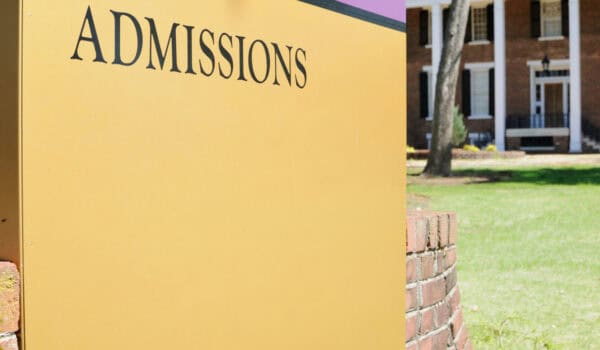
The boat is leaking: why is the change to admissions at one of the oldest Cambridge colleges a problem?
This blog was kindly authored by Charlotte Gleed, former HEPI intern and current MPhil student at the University of Cambridge.
A Guardian article revealing that Trinity Hall College at the University of Cambridge will target elite private schools for student recruitment has ignited a fierce debate this week. The article reveals how Fellows at one of the oldest Cambridge colleges voted to change their admissions strategy to approach a select group of 50 independent schools. The intention is to improve the ‘quality’ of applicants, following concerns that ‘reverse discrimination’ is the cause of this quality issue.
But this diagnosis is a problematic one. And more concerning, it is a move which risks not only an interruption of access and widening participation efforts, but a radical setback.
Why has Trinity Hall, Cambridge made this move?
Trinity Hall claims that the change to their admissions policy is a ‘targeted recruitment strategy’. Their objective is to encourage students from the selected private schools to apply for undergraduate courses in a select list of subjects including languages, music, and classics. But this puts a – large and potentially destructive – spanner in the works for access to higher education.
Not only does this strategy support a small minority of a privileged few, given that 7% of the population in the United Kingdom is privately educated. It also focuses on subjects, like music, which state schools have long struggled to maintain at equal levels to their independent counterparts. There has been a 25% drop in pupils studying GCSE Music in England over the last 15 years, and Parliament debated the issue in July 2025 over cuts and underfunding to musical education.
A HEPI report from July 2025 raised concerns about the language crisis and the decline in uptake of students studying languages at school. So Trinity Hall are valid in their efforts to find ways to increase applications for languages, in particular. But their strategy of targeting the most – economically – selective schools is flawed.
If this policy is implemented in the 2026 / 2027 admissions cycle and beyond the gap between outcomes for state and privately educated students in higher education will widen. Not only could this decision reverse sustained efforts to widen participation to higher education, but it will ultimately mean that ‘privileged pasts become privileged futures’, as the Dearing Report warned almost thirty years ago in 1997.
Change to admissions policies is not always a bad thing. Back in 1965, Hertford College, Oxford devised, what is still a little known access programme called ‘The Tanner Scheme’. The programme was the first outreach initiative across Oxford and Cambridge: a revolutionary step for increasing accessibility to the most selective universities in the country – and the world. But its initial motivation was less egalitarian and philanthropic.
The first version of the scheme was targeted at a select few boys’ grammar schools in the north of England, whose students the college admissions tutors believed were untapped talent. But the hidden goal was neither to widen participation nor improve access for these talented students, but to improve the academic record of the college within Oxford. Having exhausted the pool of privately educated talent, the next best option was academic students with ability and potential, not wealth.
Sound familiar…? Only now potential and wealth are being combined.
There is a real concern that a new precedent could be set within Oxbridge colleges, which threatens the long-established practice of widening participation. Colleges at both Oxford and Cambridge have a degree of independence unrivalled compared to most other higher education institutions. The Office for Students requires all higher education institutions to have an Access and Participation Plan (APPs) which identifies access and participation gaps unique to their student cohorts. APPs have not only held these institutions accountable but taken the sector in a positive direction towards increased access.
But the Trinity Hall revelations show there is a loophole. Despite the Office for Students’ requirement, it appears that colleges can target what is an already overrepresented cohort without regulatory intervention. 29.0% of undergraduates accepted for the 2024/25 admissions cycle were privately educated, even though only 7% of the population is. While the majority of Cambridge acceptances come from ‘maintained’ schools (comprehensive and grammar schools, as well as sixth form and further education colleges) the disproportionate gap between the number of students attending independent schools and their acceptance of a place is troubling for access.
That loophole needs closing. The ramifications for access to higher education could be catastrophic if a new trend begins. The Guardian reports that one member of staff at Trinity Hall, Cambridge called the policy ‘a slap in the face’ for state-educated undergraduates. But there is an even higher stake than this. It could mean that higher education becomes more inaccessible for those whose life it could transform most.
The boat is not sinking – yet. But there is a risk it could.



Comments
Albert Wright says:
Each University is an independent institution, it is allowed to decide which students to accept. If it wants to attract what it considers the best talent, let them do it.
Widening participation by insisting on a mathematical percentage for a specific institution is going too far.
Reply
Replies
Paul Davey says:
What is allowed and what is fair and beneficial to society are two different things. My late Dad’s golf club forbid women to enter the bar area because the members wanted it that way.
Trinity should be ashamed – a clear policy of preservation of privilege. If that doesn’t leave a bad taste in your mouth in the context of education, not much will. [Paul Davey – Tonbridge School 1980-86 Aluminus]
Reply
Replies
Max Penhaligon says:
Your view of what is good for society is subjective. It is a fair and just argument to say that fostering our best talent is best for our country and that we want our most able students to attend our best universities, open to all on ability. Your comparison with women at a golf club is not valid. The universities are open to all – regardless of sex, race or religion. This must be sacred. But your analogy would be fairer to say the golf club took the best golfers who are likely to have paid for lessons. If we want to be win, we surely need to start with our best young golfers and nurture them? Interesting that I’m saying this having gone to a state school and you went to one of the UK’s finest public schools.
Reply
Les Ebdon says:
Well said Charlotte. This new policy will only entrench privilege and illustrates the systematic bias that is within the system.
Reply
Ros Lucas says:
Not surprising in the current climate and escalating fees.
There has been a trend for high finance fliers, not all with Oxbridge Degrees to drop out and try their hand at more practical careers/set ups as they reach a boredom threshhold.
As money with sometimes relevant experience will allow mature entry to Oxbridge, that will be of greater benefit and easier to access for thise who have made their money or been left it…
So following an Apprenticeship route might begin to suit many more, not just the mega rich.
Agree seems very elitist, but that is today’s world – we shall have to wait and see.
Reply
Hannah Lamb says:
The implication that looking for the best students is somehow morally wrong is why this country is not as great as it once was. Once students get to university it’s too late to address the imbalance. We need earlier intervention and we need to accept private schools are very good and we should make it more possible for kids to access them.
Reply
Anna Perry says:
The author needs to check her numbers. The percentage of students educated privately at sixth form, which are the students eligible to be recruited by universities, greatly exceeds 7%. Undergraduate recruitment needs to be expressed as state/private/overseas students over time.
Reply
Anna Engelhardt says:
the endless 29% vs 7% comparison is misleading. Given Cambridge’s entrance requirements, a fair comparison would be the percentage of A*A*A+ grades achieved by state school pupils versus private school pupils. Having analysed this data, there is no overrepresentation of private school pupils at all once A-Level results are taken into account.
Cambridge cannot recruit from the 100% of pupils, as one of the top universities in the world, it recruits from the top 2-5% of pupils in terms of academic achievement.
Reply
Astrid Treherne says:
All that screeching about unequal access is total nonsense regarding the three subjects concerned. It is not the fault of private schools or oxbridge that classics is not taught in British state schools and modern languages widely abandoned. And as for music…..I paid good money from my brilliant daughter to learn 5 languages and the violin because I just happen to think that’s what makes a good education (I’m German). If in this country successive governments think none of these things matter, then why should a Cambridge college that cannot find students with the necessary prior training to study these subjects in the state sector resign itself to mediocrity or even to closing up shop completely. And yes, my daughter read classics at Trinity Hall and she very much deserved her place.
Reply
Add comment