AI is raising the first rung: Who will turn graduates into professionals?
Join HEPI, AHEP and TechnologyOne for a webinar on Thursday 12 November, 12pm-1pm, exploring the findings of The invisible majority (HEPI Report 205), a study of the professional and support staff who make up more than half of the UK higher education workforce. The session will examine the impact of financial pressures and organisational change on these staff, and discuss how universities can protect the skills and capability they depend on while budgets remain tight. Find details of speakers and register here.
This blog was kindly authored by Professor Mohamed Abdel-Maguid, Pro Vice-Chancellor for Education, Student growth and Global Engagement at Canterbury Christ Church University.
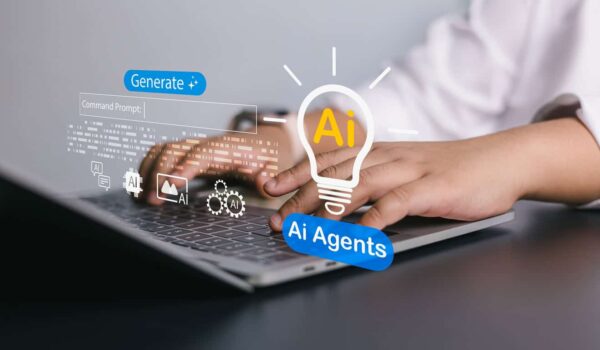
The debate about Artificial Intelligence (AI) and graduate jobs is usually framed as a question of job numbers: how many entry-level roles will disappear? This matters, but in my view, it is not the most important question. A deeper risk is that artificial intelligence is absorbing the work through which graduates develop into trusted professionals.
Routine analysis, first drafts, basic coding, first-triage casework, standard research and reporting were never the most exciting parts of professional life. But they did two jobs simultaneously. They created value for the employer and gave junior staff repetitive tasks, feedback, supervised responsibility and space to make bounded mistakes. This was a form of apprenticeship, even when nobody called it so.
For decades, there was an implicit arrangement: Universities developed disciplinary knowledge, skills and initial competences; Employers recruited graduates and carried part of the cost of turning graduate competences into trusted professional judgement and, where relevant, professional bodies set the standards. Over time, the graduate transformed from a novice with foundational capabilities to a professional trusted to act independently and exercise judgement when faced with new and unfamiliar situations.
Artificial intelligence disrupts this implicit arrangement.
The Institute of Student Employers’ Student Development Survey 2026, which draws on responses from 144 employers, reports that 87 per cent of employers expect artificial intelligence to reshape graduate and apprentice roles. Forty-three per cent say their entry-level roles have already evolved in response to it but have not been formally redesigned.
PwC’s 2026 Global AI Jobs Barometer provides clear evidence of what is happening. Its analysis of 2.4 million entry-level jobs in the United States found that most AI-exposed junior roles are seven times more likely than the least AI-exposed roles to require capabilities traditionally associated with more senior staff. These ‘seniorised’ roles that require leadership, judgement and adaptability from junior staff have grown by 35 per cent since 2019, while non-seniorised roles have declined by 10 per cent. PwC reaches a similar conclusion about the development problem: as AI absorbs routine work, some of the activity that once served as an informal apprenticeship is disappearing.
Evidence from the UK Institute of Student Employers (ISE) points to a similar story. ISE’s Student Recruitment Survey 2025 found that graduate hiring had fallen by 8 per cent year-on-year, with competition reaching a historic high of 140 applications per vacancy.
This is not just a simple story of disappearing jobs. The first rung of the professional ladder is being raised. Employers are asking for judgement, leadership and adaptability earlier, while reducing the routine work through which those capabilities were traditionally developed. We are asking graduates to walk into their first jobs with experience before giving them the space to develop it.
Who now owns graduate professional formation?
Universities cannot solve this by adding an artificial intelligence module to every course; nor should they claim the responsibility for the whole of professional formation. Employers and professional bodies remain essential. But the implicit arrangement between them is beginning to break down. Universities cannot safely assume that employers will continue to provide the same developmental bridge between graduate competences and professional judgement.
Three decisions are now needed:
First, universities should define what graduate-level judgement means in each discipline and design for it across the whole student learning journey. Judgement is not something we can assess in separate modules and hope it will somehow accumulate into professional capability. Students need repeated opportunities to work with unfamiliar problems, incomplete or conflicting evidence and consequences. They also need ample opportunities to use AI, challenge it and explain why they accepted, modified or rejected its outputs. A polished output or a working artefact is no longer sufficient evidence of capability.
Second, employers should consider not only the productivity value of junior work but also its developmental value before fully automating it. This is not an argument for preserving inefficient tasks or workflows. It is an argument for replacing their implicit apprenticeship function in a deliberate way through supervised projects, simulation, exposure to clients and progressively greater decision authority. Otherwise, there is a risk that optimising today’s workflows will weaken tomorrow’s pipeline of expertise.
Third, government should use the newly established Early Careers Jobs Alliance to develop a ‘graduate formation model’ for AI-exposed sectors. Universities, colleges, employers, professional bodies and Skills England should work together to establish who develops which capabilities, where that development happens, and who pays for it. Funding for placements, degree apprenticeships and employer-led training should then support this model, with access and success monitored by socioeconomic background.
The equity point is important because if professional formation moves out of paid junior work and into mainly unpaid internships, and other routes dependent on additional credentials, graduates from disadvantaged backgrounds will face a first rung that has moved well beyond their reach.
On the positive side, AI may create more interesting and productive entry-level roles. However, we still need a credible route from novice to trusted professional.
In summary: The strategic question is no longer simply what jobs graduates will enter.
It is who will now provide the experience through which novices become trusted professionals, and who will pay for it.



Comments
Jonathan Alltimes says:
What is judgement?
I agree, it is certain employers are substituting graduate tasks with AI. On-the-job training for learning organization-specific knowledge and skills for specific work is a weakness of the British system of employment. Traditionally, employers selected graduates for management training schemes, except for specific technical jobs. What employers did not provide at scale was systematic training for everyone else who was neither a graduate nor a technical apprentice. Very few graduates become professionals, in the sense of regulated by statutory codes of practice. Technologies do not simply substitute for labour, technologies change the processes of production or service deliver, which is why learning rudimentary tasks is neccessary for understanding how work is performed and if it is fit for purpose. The performance of the tasks makes an internalised model with which to measure the quality of the work and how it is integrated with the work of other people and technologies or other resources. Judgement for making choices under conditions of absolute uncertainty is rare. Normally, with insufficient knowledge and information, people resort to constrained choices using heuristics, which can be widened and improved by teams of specialists. The problem with all of the government training schemes is the inability to scale for hundreds of thousands of people. The elites have their training and employment opportunities and the government provides opportunities for the disadvantaged, but the great mass have little. It is impossible for higher education to substitute for organization-specific and output specific work. The intercalated year of training and employment makes some provision and is the better option, which higher education can coordinate with employers. Mapping degree subject-specific skills and simulations to occupations is useful, but employers are also searching for new capabilities which research can provide.
Reply
Replies
Jonathan Alltimes says:
The proportion of degree-specific standardization is the question.
Reply
Mohamed Abdel-Maguid says:
Thank you, Jonathan for reading in depth and your insight. I very much appreciate it. For the most part, I feel our arguments are aligned while expressed in different ways.
On judgement, in this context I mean the ability to apply knowledge and skills to unfamiliar situations, often with incomplete or at times conflicting information, and make decisions that can be justified, owned and defended.
I agree that making decisions under absolute uncertainty is rare. In my view, this goes beyond judgement in this context, into wisdom and decision-making at the highest tier. Having said that, part of judgement and professional formation is recognising when a situation appears totally uncertain, but with more effort one can obtain relevant, helpful information.
You make an important point about professionals. My framing of the tripartite link between universities, employers and professional bodies might have narrowed the scope I intended.
My argument is not limited to regulated professions, especially those requiring a licence to practise. I am more concerned about the development of maturity and seasoning in any job, where a junior person develops discipline, proficiency, precision, reliability and dependability, such that an employer can rely on them to deliver important business assignments.
I tell my students the answer to the question “Can your employer sign a business contract relying on you to deliver your part” is often related to your professionalism.
Employers have not always offered systematic training at scale. However, my argument goes beyond graduate schemes and technical apprenticeships. I am concerned about those sectors and employers where junior-level jobs provided opportunities for graduates to learn through experience, supported by more senior colleagues, without being expected to perform as seasoned professionals from the outset.
Your point about technology changing processes and workflows is spot on.
This is why I argued that AI is also likely to create more interesting entry-level opportunities. Nevertheless, junior people still need to master the rudimentary tasks. AI is replacing graduate tasks and, in many cases, the jobs associated with them, consequently removing opportunities to develop this experience.
Your description of how performing tasks creates an internalised model of work is exactly what I mean by the implicit apprenticeship. This is how judgement and professional formation are forged.
You have also hit a nerve in flagging the silent majority who fall through the cracks. This concerns me personally and professionally.
The elite and privileged can access opportunities, the significantly disadvantaged have specific support schemes, and the majority of ordinary people are expected to survive on their own. Yet they are the powerhouse of the nation. Investment in their development will pay dividends, in my view.
I accept your point about the difficulty of scaling government training schemes. In my third recommendation, I proposed fine-tuning the Early Careers Jobs Alliance’s scope so it can scale through employers and universities, rather than relying on a centrally delivered government scheme.
Higher education cannot replace industries, and it should not try to. However, I stand by my recommendation that higher education must redefine graduate attributes and redesign learning, teaching and assessment to better prepare graduates for an AI-enabled future.
I am with you that industry placements, and sandwich courses in particular, are very useful. However, they remain a minority route because of the practical difficulties of securing placements at volume. I do not believe sandwich courses alone will prepare graduates for the future without redesigning the higher education offer.
Finally, I agree that mapping degree subject-specific skills and simulations to occupations can help deliver the work a business needs, and deliver it well, within existing performance boundaries. But it is research and innovation that can make the business leap to the next curve. These are among the abilities graduates must develop.
Reply
Will Berard says:
Pangram deems this 97% AI generated (the line crediting the “author” isn’t).
No disclosure.
For shame.
Reply
Mohamed Abdel-Maguid says:
The role of AI detection in academia is a rich topic for research and debate.
Justin Weinberg’s article, “Careful with those Accusations”, is worth reading in this context: https://dailynous.com/2026/08/27/careful-with-those-accusations/
Reply
Add comment