
Do we do enough to address student-on-student bullying in higher ed?
HEPI Director, Nick Hillman, reviews Bullyocracy: How the Social Hierarchy Enables Bullies to Rule Schools, Work Places and Society at Large (2020) by Donald Jeffries.
The uncomfortable truths in Bullyocracy, a lengthy book about bullying in education and the workplace, come thick and fast. We are reminded that:
- bullying is common;
- bullying does not disappear just because you have got an anti-bullying policy;
- many anti-bullying campaigners indulge in bullying themselves;
- bullying can be encouraged by hyper-competitive sports; and
- bullying is the cause for some people, tragically, to take their own lives while often leading to a lifetime of damage for others.
Moreover, the author confirms with hard evidence that bullying is very often overlooked, regularly encouraged and sometimes perpetrated by those in authority. (This is not a book about politics but there is – unsurprisingly perhaps – a Postscript on Donald Trump.)
It all makes for a distressing read because so much of the book is made up of tragic individual stories about young people being victimised, the people in charge looking the other way and authorities pretending to have gripped a problem they clearly often have not – sometimes, educators and officials even put the blame on the victims of bullying.
The cruellest stories among the many included are those where the perpetrators take to social media to celebrate the deaths of those they have tormented to an early grave. I read the book in small chunks over a few months to stop the heartbreaking stories from becoming overwhelming.
The tales are almost entirely about the United States, which means ultra-competitive youth sports, as well as cheerleading, receive a lot of space. Indeed, the link between youthful sports stars and bullying are painted by the author as distinct to modern America, although they remind me of those ancient stories set in our own public (ie private) schools, such as Thomas Hughes’s Tom Brown’s Schooldays (1857) and Alec Waugh’s The Loom of Youth (1917). Bullyocracy also discusses deeply uncomfortable truths, such as the high proportion of school shooters in the United States whose motivations included retaliating against those who had bullied and ostracised them.
So why am I reviewing an old(ish) book that is not mainly about higher education and which is largely focused on another country on the HEPI site? I am doing so for the same reason that I bought the book when I saw it going cheap in the fabulous Norrington Room in Blackwell’s bookshop in Oxford: because I have long suspected we should discuss this topic more when it comes to UK higher education.
Bullying can have a deeply negative effect on people’s whole lives and it seems to be the antithesis of education, hampering learning. Plus bullying is experienced (according to polls) by a very high proportion of young people. So it deserves to be a mainstream issue.
Yet to the degree that conversations focus on bullying in higher education, they more often seem to about staff-on-staff or student-on-staff bullying than about student-on-student bullying. Perhaps I am wrong about this, given the recent spotlight on the horrific increase in anti-semitic bullying as well as initiatives like Unite Students’s important Living Black at University project and the Office for Students’s Condition E6 on Harassment and sexual misconduct.
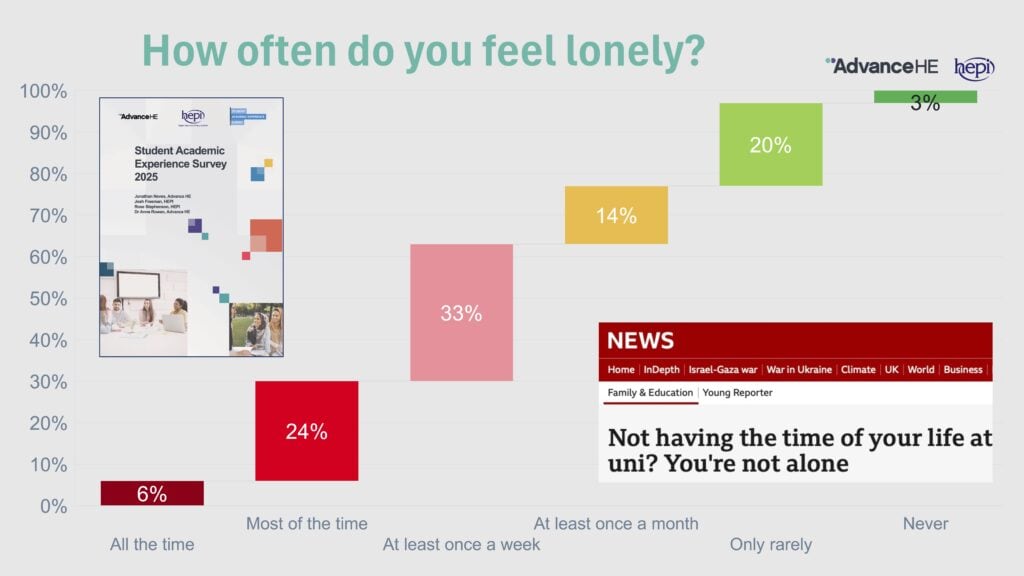
Student-on-student bullying probably gets more attention that it used to but, either way, we know there is an epidemic of loneliness and a lack of belonging among the student body as a whole and, presumably, this may sometimes result from – and in turn encourage – bullying.
Despite the important focus it puts on the issue of bullying, Bullyocracy is far from perfect, however. To take one small example, the sharp personal attacks on the people who have written material the author disagrees with, rather than on the words those people have written, sit uncomfortably alongside the book’s theme. We are told, for instance, about a woman called Sherri Gordon that, ‘it is legitimate to question whether Gordon is from this planet.’ Her unearthly crime? To have written a piece entitled ‘4 Reasons Why Empowering Athletes Can Prevent School Bullying’.
More significantly, there are parts of the book where all educators seem to be tarred with the same brush. With the benefit of hindsight, I should probably not have been surprised by this for I discovered after finishing the book that the author fishes in the conspiracy-theory well on seemingly everything from JFK’s assassination onwards – one of his books has even been described as ‘the book that belongs in every conspiracy theorist’s library’!
To such a mind, bullying is perhaps best understood as a conspiracy by those in authority against the young, but what if its incidence may sometimes reflect the reality that people in authority do not always know how to respond effectively and may lack the expertise and training to do so successfully? Indeed, on finding out about the author’s general worldview, I briefly contemplated junking this review altogether. I reconsidered because the purpose of a book review is to trigger further conversation rather than to indulge in hagiography.
When I finally reached the end of Bullyocracy, I was left longing to hear more about any places where a positive school or college environment had successfully blocked bullying that otherwise might have occurred or which had nipped a burgeoning outbreak in the bud. But the book is lacking in any such practical advice.
Indeed, I originally opted to write a review in the hope that it might encourage those with important things to say on the incidence of bullying in higher education and how it can be successfully tackled to get in touch. Please feel free to do so.






Comments
dominique thompson says:
Thank you for writing about a topic that I also believe is frequently overlooked. My interest has become stronger since my work on social ostracism among students opened up a lot of new conversations with students, and their families, about the devastating effects that being ignored/ cut off can have on young people, including tragically leading them to take their own lives. Ostracism is a form of bullying which we need to talk about more. It is under the radar but seemingly very common as a form of managing behaviour that is deemed unacceptable, even without evidence. It flourishes because no-one wants to challenge the people cutting others off, at the risk of becoming the next one to be cancelled. I am hoping there will be more work nationally on social ostracism, and other bullying behaviours, but as with so many topics like this, more research is also needed. One for HEPI to add to a survey perhaps? Thank you
Reply
Jonathan Alltimes says:
You can do your own review of research papers on bullying in English universities. That bullying exists is obviously likely, as there is nothing about the social norms of universities which would prevent them from the occurrence of repeated harassment. What could be surprising to most people is the level at which being repeatedly harassed occurs, appears to be much higher than the general population has experienced. I assume this fact is true, but why should it be true?
I have worked in local government, central government, the NHS, and English universities (as well as several private sector jobs). I never experienced or witnessed bullying in local government, central government, the NHS or the private sector (except one), but I witnessed and experienced bullying in four universities by academics on academics. I explain the difference as primarily a lack of accountability of the academics to senior academic administrators, a lack of accountability of senior academic administrators to their various boards, and lack of accountability of the academic councils to outside institutions. A secondary reason was the weak non-academic management administration providing services to the academics, including personnel departments staffed by professionals. All the other institutions within which I was employed were aware of their contractual duties and the potential for accountability, reputational damage, and financial consequences. Academics commonly deployed specious managerial and administrative arguments to enforce their will own rather than lead colleagues through persuasion. The contrast between how they behaved in practice and how they argued in research papers would have been comedic, were it not for the fact the damage they inflicted on people, organizations, and eventually themselves (they also very clever at hiding the repeated harassment). Now everyone can see the problem in higher education, once the restraint of HEFCE was removed and the OfS has yet to find its feet.
Most of the bullying I witnessed was men bullying women, but women were not averse to bullying other women. I am sorry, I gave up, the incongruity between what a university ought to be and what they actually were was simply impossible to ignore and live with (I suppose most academics learnt it as the norm). Harassment is a criminal offence and should not be tolerated.
Reply
Add comment