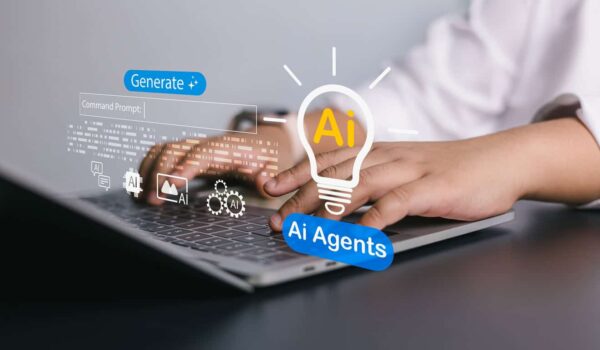
Is AI quietly eroding the social core of student teamwork?
This blog was kindly authored by Dr Folashade Akinmolayan Taiwo, Director of Centre for Research in Engineering and Materials Education, Queen Mary University of London.
In debates about generative AI in higher education much of the focus has centred on academic integrity, assessment security, and efficiency. But there is a quieter, less visible shift underway, one that goes to the heart of what group work in universities is supposed to achieve. Student teamwork has long been treated as a proxy for ‘real-world’ skills. Employers consistently emphasise the importance of communication, collaboration, and the ability to work effectively with others. Group assessment, for all its imperfections, has been one of the main ways universities attempt to cultivate these capabilities. Yet the growing presence of generative AI is beginning to reshape how students actually experience working together and not always in ways we might expect.
Increasingly, AI is not just being used to generate content, but to mediate collaboration itself. Students report using AI tools to summarise peers’ contributions, clarify sections they do not understand, or even translate group members’ ideas into more coherent prose. On the surface, this may appear efficient or even inclusive; but it also raises a more fundamental question: what happens when students turn to AI instead of each other?
At its best, group work is not simply about dividing tasks and assembling a final product. It is a structured opportunity for students to explain their thinking, to be questioned, to negotiate meaning and to navigate disagreement. These interactions are the mechanism through which social and interpersonal skills are developed. When a student struggles to understand a teammate’s contribution, the educational value lies in the process of asking, clarifying, and refining understanding together. When disagreements arise, the challenge is not just to reach a solution, but to manage difference, justify positions and adapt perspectives. These are demanding, and sometimes uncomfortable, aspects of collaboration but they are precisely what make it educationally valuable. If AI becomes the default intermediary in these moments, those opportunities risk being reduced or bypassed altogether. Instead of asking a peer for clarification, a student may ask an AI tool. Instead of negotiating meaning, they may accept a generated interpretation. Instead of being challenged, they may receive a neatly resolved answer. The result is a subtle but significant shift: group work becomes more efficient, but potentially less developmental.
This matters beyond the classroom. Recent policy discussions have increasingly highlighted the UK’s need not just for technical AI capability, but for a broader set of applied and interpersonal skills. A 2025 UK Government-commissioned report on AI skills identifies growing demand not only for technical roles, but for workers able to interpret, communicate, and apply AI outputs responsibly across sectors. Crucially, these ‘adjacent’ capabilities include explaining outputs, exercising judgement, and working collaboratively in complex environments, skills that are difficult to automate and remain in short supply.
The same pattern is visible in defence and engineering. Government strategy has emphasised the need to strengthen the talent pipeline not only through technical training, but through new forms of collaboration, leadership, and systems thinking. A recent HEPI blog by Professor Dame Karen Holford of Cranfield University on research security similarly points to the growing importance of trust, collaboration, and skills development in complex, high-stakes environments. Taken together, these signals suggest that the skills most in demand are not purely technical but social, interpretive, and relational. However, in higher education, we may be unintentionally designing these very capabilities out of the student experience.
For many years, concerns about group work have focused on fairness, unequal contributions, free-riding, and the difficulty of assessing individuals within a collective task. In response, many assessment models have prioritised the final output, often supplemented by peer evaluation. However, this output-focused approach may be ill-suited to an AI-mediated environment. If students can produce high-quality artefacts with limited interaction, then the presence of group work in the curriculum no longer guarantees the development of collaborative skills. In this context, the key issue is not whether students are ‘using AI appropriately’, but whether our current models of teamwork still achieve their intended educational purpose. A shift in emphasis may be needed from assessing what groups produce to paying greater attention to how they work together. This does not mean abandoning group outputs but rather recognising that the process of collaboration must be made more visible, more intentional, and more central to assessment.
There are practical ways this could be approached. Assessment designs could require students to explain and justify decisions collectively, making their reasoning and interaction explicit. Tasks could be structured to include moments of critique and response, ensuring that students engage with, rather than bypass, each other’s ideas. Greater emphasis could be placed on evaluating how students communicate, question, and negotiate, not just what they ultimately submit. More broadly, there is a need to recognise that generative AI is not only a tool for producing knowledge, but a potential substitute for certain kinds of human interaction. If left unexamined, this may lead to graduates who are highly capable of working with AI, but less experienced in working with each other. This would sit uneasily alongside wider sector ambitions. As the UK seeks to address skills shortages in priority sectors, from engineering to defence to digital industries, the emphasis is increasingly on a workforce that can collaborate, interpret, and act responsibly in AI-rich environments. The challenge is not to resist AI in student teamwork, but to ensure that its use does not hollow out the very skills higher education seeks to develop.
As universities continue to adapt to an AI-rich environment, it may be time to revisit a basic question: when we ask students to work in groups, what are we really trying to teach and are our current approaches still achieving it?


Comments
Vincent Everett says:
Oxford University have just published case studies in “support” of their role out of AI. Paints a bleak picture of loneliness and isolation from colleagues. As well as shirking methodical work and honing the expression of ideas. I suspect it was written by AI because surely a human would have noticed?
Reply
Replies
Vincent Everett says:
Did you spot the typo? Just proving I am human maybe.
Reply
Jonathan Alltimes says:
Yes, AI is changing how students work together.
Are academics good at explaining their thinking, being questioned, negotiating meaning, navigating disagreement, and working in teams? What is absent from the model described here is the academic as a model of teamworking. Academics are distant from students, except possibly when leading tutorials. Generally, they conduct themselves in the manner of the Renaissance and humanistic ideal of the free individual intellect. It is generally how they work, seeking disagreement and difference, particularly in the non-science and technology subjects. The new approach is to show how academics use AI in teams, but I doubt that will occur, until they can do so in departmental meetings and other works teams like research.
Reply
Add comment