
HEPI / St John’s College, University of Oxford Lecture: Higher Learning in the Post-Truth Age
Overview
What are universities’ responsibilities in an era undergoing profound technological and political change and one marked increasingly by misinformation and declining trust in major institutions?
Professor Duncan Ivison draws on his background in political philosophy, as well as extensive experience in higher education, to explore the place of universities in today’s world. Despite immense challenges—both recently and in the past—universities have proved themselves as surprisingly resilient and adaptable civic and public institutions (so far). But our social license and the very value proposition of a university education is today under pressure as never before. This lecture invites us to reflect on the purpose of universities, how they might continue to serve the public good, while renewing their intellectual and ethical foundation for the future.
The lecture will be introduced by Professor Irene Tracey, the Vice-Chancellor at the University of Oxford, who will give the vote of thanks.
The lecture will be followed by an In Conversation with Duncan Ivison and Irene Tracey. They will be joined by the editors of a new series, A Cultural History of Higher Learning (Bloomsbury Academic 2025), which explores the dynamic forces shaping higher learning over the last 2500 years, including the modern era.
A drinks reception will follow, kindly sponsored by the Higher Education Policy Institute (HEPI).
Speakers and panellists
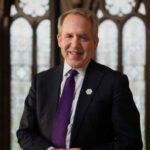
Professor Duncan Ivison
President and Vice-Chancellor, University of Manchester


Professor Irene Tracey
Vice-Chancellor, University of Oxford

Professor Ning de Coninck-Smith
Professor of History of Education, Aarhus University, Denmark, and Anthology Editor of A Cultural History of Higher Learning

Professor Julia Horne
Professor of History and University Historian, University of Sydney, Australia, and Anthology Editor of A Cultural History of Higher Learning

Professor William Whyte
Professor of Social and Architectural History, University of Oxford, and Anthology Editor of A Cultural History of Higher Learning
Register
Register your place here.



Comments
Jonathan Alltimes says:
The purpose of the academic guild was to temper the actions of despotic and tyrannical rulers. The master teachers taught and developed civil law and jurisprudence for effecting intellectual control over such rulers (other learning was incorporated from other guilds and institutions). The chief ground of contention between the rulers and the European Christian institutions was the ownership and control of property and taxes. The college sustained the community of masters and scholars and the university was the apparatus for legal representation and the intergenerational ownership and control of the college’s assets. The college of masters was founded on the learning of the monasteries and cathedral schools from which it was able to regenerate its learning along with its own research and communication with other guilds. The university was an independent and semi-autonomous institution separate from the Church, the ruler and other representatives of the state, and business. The original rationale for the academic guilds exists today and so does the need to control the actions of the state and be a separate institution from religion, the state, and business. These other institutions will not willingly licence the university, as it seeks to control their actions. The willingness to licence the university grew out of the common ground of European Christendom, which no longer exists and so the university is in danger of being suppressed and oppressed as an institution, particularly as we have chosen to accept state funds from taxes.
Reply
Add comment